
Global Trade is No Longer Predictable
There was a time when global trade followed patterns.
Exporters knew their markets.
Shipping routes were stable.
Demand was relatively predictable.
But today, things are different.
Markets are shifting faster than ever. Supply chains are becoming more complex. And external factors—like geopolitical tensions, climate changes, and trade policies—are influencing export businesses in real time.
In 2026, global trade is not just about supply and demand anymore. It is about adaptability.
At Paathway Global, one thing has become very clear:
the exporters who succeed today are not just efficient—they are flexible.
The Changing Landscape of Global Trade
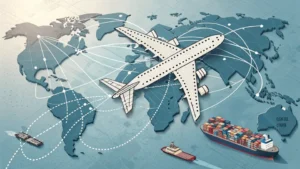
Global trade is evolving at multiple levels.
Recent global data shows that while trade continues to grow, it is becoming more volatile due to geopolitical tensions, rising costs, and policy changes.
At the same time:
- Trade growth is being driven heavily by emerging markets
- Supply chains are shifting away from dependency on single regions
- Technology and AI are influencing decision-making
Even India’s export performance reflects this shift. India’s total exports crossed significant growth levels in early 2026, showing resilience despite global uncertainty.
This tells us something important:
Global trade is not slowing—it is transforming.
Agriculture Exports: A Sector Full of Opportunity
India’s agricultural exports are entering a strong growth phase.
- Agricultural exports grew from $34.5 billion to $51.1 billion in recent years
- Processed food exports are increasing steadily
- Demand for fresh produce, spices, and grains is rising globally
This growth is being driven by:
- Increasing global food demand
- Climate-related production challenges in other countries
- Rising preference for natural and plant-based products
Countries are actively diversifying their sourcing partners, and India is becoming a preferred option.
For exporters, this means:
👉 More opportunity than ever before
👉 But also more competition and higher expectations
The Reality Check: Challenges Exporters Face Today
Despite the opportunities, exporters today operate in a more challenging environment.
1. Market Volatility
Demand is no longer stable.
For example:
- Spice exports have seen fluctuations due to geopolitical tensions and changing buyer demand
- Trade disruptions can suddenly impact entire markets
Exporters must now constantly monitor global trends.
2. Supply Chain Disruptions
Global events—especially in regions like the Middle East—are directly affecting trade routes and logistics.
Recent developments show:
- Export credit support has been extended in India due to trade disruptions
- Shipping delays and rising freight costs are becoming common
This means exporters must plan for uncertainty, not just efficiency.
3. Rising Competition
Global buyers today have more options than ever.
They compare suppliers based on:
- Quality
- Consistency
- Pricing
- Reliability
Exporters who cannot maintain standards risk losing long-term business.
4. Changing Buyer Expectations
Buyers are no longer just looking for products.
They expect:
- Traceability
- Transparency
- Compliance with global standards
- Reliable communication
This shift is redefining what it means to be a “trusted exporter.”
The Big Shift: From Efficiency to Adaptability
Earlier, success in exports was based on efficiency:
- Faster shipments
- Lower costs
- Higher volumes
Today, success depends on something else:
Adaptability
Exporters must now:
- Adjust to changing markets
- Respond to disruptions quickly
- Explore new trade routes
- Build flexible supply chains
Adaptability is no longer optional—it is the new competitive advantage.
What Smart Exporters Are Doing Differently
Forward-thinking exporters are already changing how they operate.
1. Diversifying Markets
Instead of depending on one region, exporters are expanding into:
- Africa
- Southeast Asia
- Europe
- Emerging markets
This reduces risk and increases stability.
2. Strengthening Supply Chains
Exporters are investing in:
- Better cold chain systems
- Strong logistics partnerships
- Inventory planning
Because today, supply chain reliability = business continuity.
3. Moving Toward Value-Added Exports
There is a clear shift toward:
- Processed food
- Packaged products
- Branded exports
This increases margins and global competitiveness.
4. Using Technology for Smarter Decisions
From market analysis to logistics tracking, exporters are using data and tools to:
- Understand demand
- Track shipments
- Improve planning
Technology is becoming a silent partner in global trade.
The Role of Trust in Modern Trade
Even with all these changes, one thing remains constant:
Trust.
Global trade is built on relationships.
Buyers prefer exporters who:
- Deliver consistent quality
- Communicate clearly
- Handle challenges professionally
In uncertain times, trust becomes even more valuable.
How Paathway Global Aligns with the New Trade Reality
At Paathway Global, our approach is built around one principle:
Consistency with adaptability.
We focus on:
- Understanding global market trends
- Building strong supply networks
- Ensuring quality across shipments
- Maintaining transparent communication with buyers
We believe exporting is not just about sending products—it is about building long-term partnerships.
In today’s dynamic environment, exporters must think beyond transactions.
They must think in terms of:
- Relationships
- Systems
- Sustainability
That is where real growth happens.
The Future of Global Trade: What Lies Ahead
Looking forward, global trade will continue to evolve.
Some key trends we can expect:
1. More Regional Trade Partnerships
Countries will strengthen trade within regions to reduce dependency on long-distance supply chains.
2. Greater Focus on Food Security
Demand for reliable agricultural exporters will continue to rise.
3. Increased Role of Technology
AI, data analytics, and digital trade platforms will shape decision-making.
4. Continued Volatility
Geopolitical and economic uncertainties will remain part of the trade environment.
Conclusion: The Exporters Who Adapt Will Lead
The global trade landscape is no longer predictable—but it is full of opportunity.
India is in a strong position:
- Growing agricultural exports
- Expanding production capacity
- Increasing global demand
But success will not come automatically.
The exporters who will lead in the coming years are those who:
- Stay informed
- Stay flexible
- Build strong systems
- Focus on long-term relationships
Because in today’s world:
It’s not the biggest exporter who wins.
It’s the most adaptable one.